



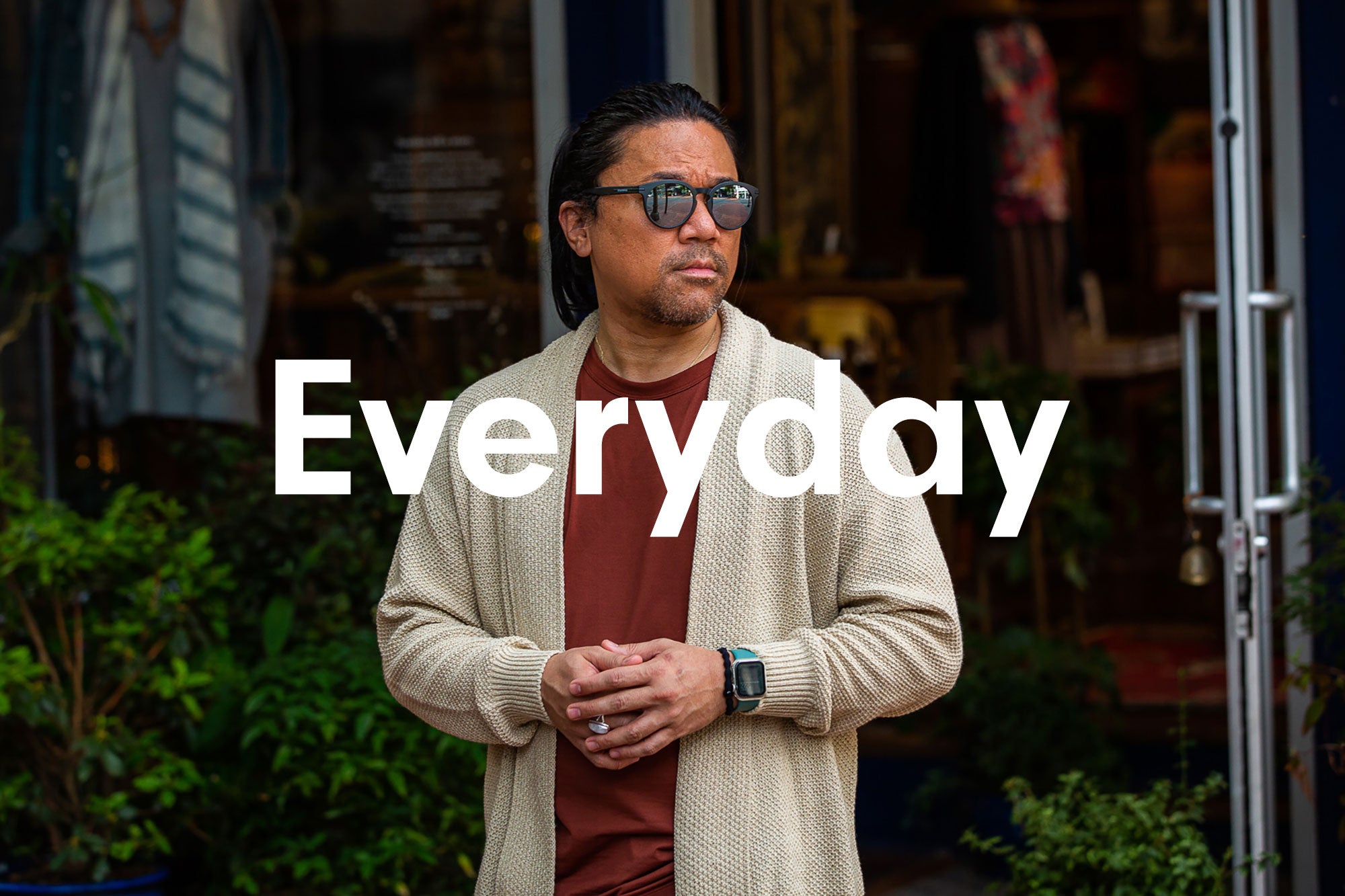



In Capistrano Beach, inside a shaping room filled with wood and foam dust, fluorescent light, and decades of memory, Joshua Martin builds surfboards the way he was taught — by hand, by eye, and by instinct.
“I was born into kind of the surfing royalty family,” he says with a laugh.
His father, Terry Martin, had already been shaping boards for a decade when he walked into the Hobie factory in 1962, stepped over the rope that said Employees Only, and asked for a job. At first, Terry was turned down, but he kept coming back. Eventually, Hobie gave him a shot.
Terry would go on to shape alongside legends like Mickey Muñoz — whose sister he later married — and over the next six decades he shaped over 80,000 boards for some of the sport’s most iconic surfers.

Josh got his first surfboard at six. But surfing itself wasn’t what captured him most. “I wouldn’t say I didn’t love surfing. It was fun. But I liked everything about the ocean. I liked fishing especially. I loved diving. Surfing was just part of that. What I really loved was working with my hands.”
The Shop Kid
At ten years old, Josh was sweeping floors and cleaning bathrooms at Hobie. Soon after, he was cutting fins on a bandsaw. “No safety glasses. No hearing protection. Nothing. I’m just this 10-year-old kid in there.”
He earned 25 cents per fin to cut them out, 50 cents to foil them. But the lesson wasn’t about money. “My dad said, ‘This is really important. If you get the trailing edge wrong, the fin will hum. It’ll vibrate. It creates drag.’ You gotta be good at what you do, especially if you work for Hobie.”

But it’s not only about measurable precision. Years later, when Josh struggled to understand why a board “didn’t look right,” his father would take a sanding block, make a few light strokes, step back, and the board would suddenly feel resolved. “He’d say, ‘How much foam do you think I just took off?’ Maybe the thickness of your fingernail I said. Then he’d say, ‘Trust your eye. Your eye can see 40,000ths of an inch. I don’t have a tool to measure that.’” That lesson stayed.
Finding His Own Line
For years, Josh shaped next to his father. Countless boards for his dad’s label, Hobie, Stüssy, and many others. But internally, it wasn’t simple. “It was a big hurdle. Your dad is arguably the best in the world, and you think, ‘Where do I fit in the mix here?’” Josh tried other careers. Law enforcement. Heating and air conditioning. A “real job.” But he kept always shaping at night.
When Terry passed away in 2012, Hobie approached Josh to continue shaping his father’s models. What began as a way to supplement income became his full-time work. Around the same time he also started to shape boards for Rachael Tilly – now a three times longboard world champion. His father initially started shaping for Rachael when she was 12 years old. Rachael would win her first world title at age 17, making her the youngest-ever surfing world champion.

Today, Josh shapes boards in the same room he ran his heating and air conditioning business out of. A space that his father once measured and declared “a perfect shaping room.” Josh builds each board start to finish. Upon customer request he will craft a surfboard using a recyclable core, plant-based epoxy, and flax cloth. It’s not easy to build a fully sustainable surfboard. But in the end, a board that gets used every day for many years is the most sustainable board there is. “The greenest surfboard is the one that lasts the longest. If you make a very durable surfboard that lasts for decades, it’s a pretty low footprint on the earth.”
The Shaping Room
Josh’s shop has a lot of character and memories. “A lot of my dad’s tools are in here. The sounds. The smell. It’s neat. It’s like he’s here with me working every day.”
A shaping room is a controlled environment: white foam, side lighting, shadows revealing subtle curves. But it can also be harsh. “The fluorescent tube with the white surfboard foam isn’t easy on the eyes.”

Josh has blue eyes, and he worries about his eye health as he ages. He remembers his father worried about his eyesight constantly. He’d say, ‘I gotta take care of my eyes. My eyes are critical to what I do.’”
Josh eventually replaced fluorescent lights with custom LEDs. Better, but still artificial. His eyes constantly shift from foam to light source, catching glare. Josh remembers Makita once required him to wear standard safety glasses for a photoshoot. “I put them on — I couldn’t see anything. They were fogging up. The glare from the lights. I can’t work in these things.” That’s when he had the idea to try wearing sunglasses in the shaping room.
Protect What Allows You to Keep Doing the Work
For years, Josh wore heavy glass fishing lenses – at the beach, driving and even tried them in the shaping room. They helped with glare, but by the end of the day they were exhausting. When his favorite pair was discontinued, he started searching. “I did a Google search, found Shinzo Tamura, and read that they were multi-generational, handcrafted in Japan. I thought, ‘These got to be good.’”
He first noticed the difference on the shoreline. Early mornings, sight-fishing for corbina (California kingcroaker) in shallow water, reading subtle movement beneath the surface — that’s where clarity matters most. The fish move along the edge of the wave, almost invisible unless you can separate glare from depth. “You can sight fish for them,” he says. “You see them in the water, cast ahead of them, and watch them come up and grab your fly.”

When he handed a pair to his son-in-law — a dedicated fisherman who had sworn by another premium brand — the reaction was immediate. “He put them on and said, ‘Oh, wow. This is way different.’”
Back in the shaping room, he wears the Quartz lens. “My eyes are critical to what I do.” This lens is very light and perfect for this environment. “It’s like I get to put my eyes in a hammock and just relax. They don’t fog. The dust doesn’t stick to them. They just make the experience nicer.” To put it in pure shaper logic: “If I’m in a better mood when I’m working… I make a better surfboard.” Josh smiles.
Making Instead of Replacing
The instinct to build lasting objects goes back to Josh’s childhood. “When I was a kid, we only had one vehicle – a 1970 Ford Econoline van. No windows. It was just a cargo van for hauling surfboards. But it was also our only car.” When the plastic knob on the window crank of the family van broke, his father carved a new one from ironwood. “He probably could’ve gone to the auto parts store and bought one. But no. He made it.”
Every time Josh rolled down the window, he felt the difference. “It’s worth making stuff sometimes rather than just replacing it.”
Today, Josh uses resin scraps from surfboards to create shifter knobs or jewelry, or he creates chopsticks and pencils carved from wood he uses for the stringer. Objects that carry time inside them. “Every one of them is unique. Random. And they’re beautiful.”

At first, it wasn’t a business. It was just continuation — the same logic as the ironwood window crank. Now he sells these objects via his Etsy shop and makes some money on the side. But the real thread isn’t the income. It’s continuity. Whether it’s a world-title surfboard shaped in his shop, or a piece of resin that would’ve otherwise gone into the trash: “I really love working with my hands.”
And in the end, that’s what it comes back to — trusting your eye, trusting your hands, and building something that lasts.
Find Joshua Martin on Instagram.

This Article Features Photography by Tim Kothlow
Tim Kothlow is a photographer based in Southern California whose work centers around surf culture, craftsmanship, and life along the coast. With a documentary eye and an appreciation for texture, light, and process, Tim captures not just objects — but the people and stories behind them.
See more of Tim's work at timkothlow.com or follow him on Instagram.


